


THE NIGHT THE BEAUTIFUL GAME BECAME UGLY
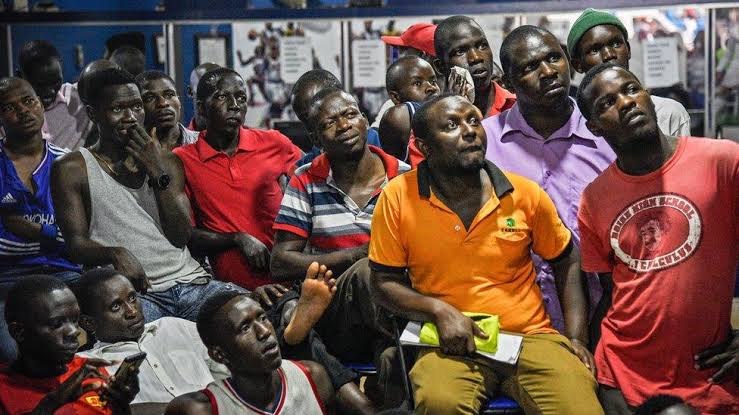
It was a warm Saturday evening in Nairobi, and 24-year-old Kevin had arrived early to secure a good seat. Around him, dozens of fans were already on their feet, jerseys on, phones out, drinks ordered, doing what millions of Africans do every weekend: watching football and daring to believe. Kevin had placed a small bet on his favourite team. Nothing dramatic. The kind of wager that makes the ninety minutes feel personal, that gives every tackle and every missed chance a meaning beyond the scoreline.
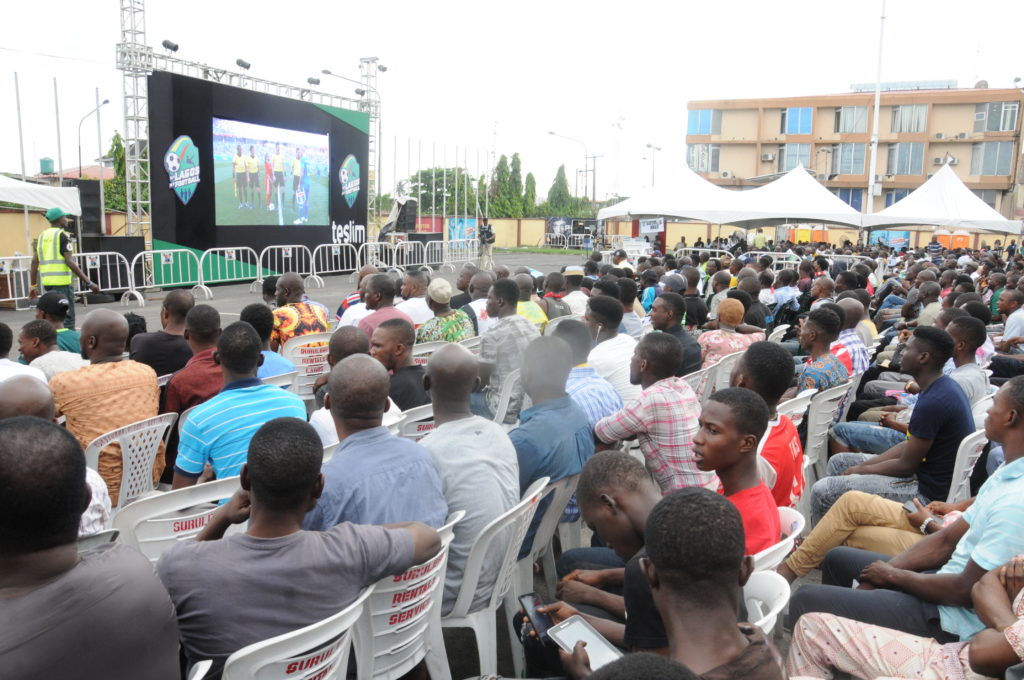
The match started normally. But somewhere around the thirtieth minute, something changed.
A defender who had been commanding all season suddenly appeared flat-footed, hesitant, making errors that seemed almost deliberate in their timing. A goalkeeper who had previously been one of the most reliable in the league fumbled a shot that any Sunday-league keeper would have held comfortably. A penalty decision came that left even neutral observers shaking their heads. By the final whistle, the score told one story, but the performance had told another. Within minutes of the final whistle, Kevin’s phone was flooded with messages. Social media was already ablaze with accusations, suspicions, and screenshots of betting markets that had moved in ways that suggested someone, somewhere, had known the result before the game was played.
A week later, it was confirmed. Regulators and football authorities had opened an investigation into suspicious betting patterns linked to the match. And Kevin, like thousands of other fans who had watched that night, was left with a question that no amount of official statements could fully answer: Had the game ever been real?
That question, subtle yet deeply corrosive, becomes impossible to ignore once raised, making it one of the most dangerous forces in African sport today
WHAT MATCH-FIXING ACTUALLY IS AND WHY IT IS MORE COMMON THAN ANYONE ADMITS
Match-fixing, at its most basic, is the manipulation of a sporting event to produce a predetermined outcome. It can involve players, referees, club officials, coaches, or organised criminal networks operating across multiple countries simultaneously. Sometimes the objective is to fix the final result. But the modern version of match-fixing is far more sophisticated than simply making a team lose and that sophistication is precisely what makes it so difficult to detect and prosecute.
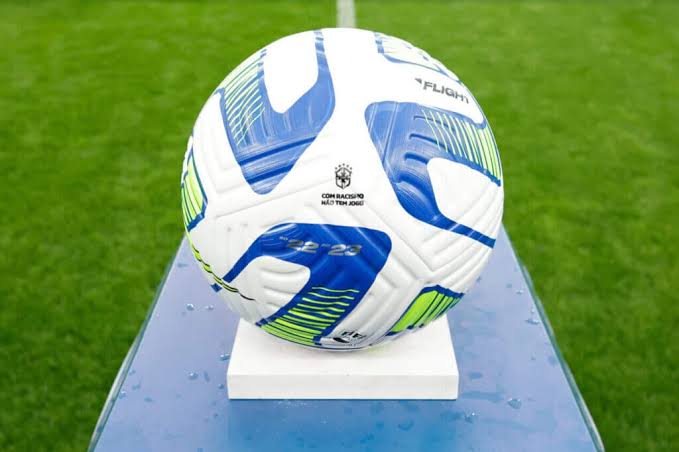
Because today’s betting markets do not only offer outcomes. They offer hundreds of possibilities within a single match: who scores the first goal, how many corners are awarded, whether a specific player receives a booking, how many minutes before a substitution. A game can be won fairly and still be manipulated because the fixing was never about the result. It was about a yellow card in the sixty-third minute that nobody noticed because the team won anyway.
AFRICA’S BETTING BOOM, THE OPPORTUNITY THAT ALSO CREATED THE VULNERABILITY
To understand match-fixing in Africa, you have to first understand what has happened to sports betting on the continent over the past decade because the two stories are inseparable.
Sports betting has transformed from a niche activity into a defining feature of African popular culture. Today, Nigeria, Kenya, Ghana, South Africa, and Tanzania sit among the most active sports betting markets in the world. Nigeria’s daily sports betting wagers exceed ten billion naira. Kenya’s betting penetration rate at approximately 76% of internet users is among the highest anywhere globally. Mobile money platforms including M-Pesa, OPay, and MTN MoMo have dissolved the financial barriers that once kept betting inaccessible, enabling micro-transactions of less than one dollar to be placed and settled on a smartphone in seconds. The result is a market of extraordinary depth and reach, and extraordinary vulnerability.
The 2026 Gaming Compliance International report covering all 54 African nations found that Africa’s total online gambling market generated an estimated USD 23 billion in gross gaming revenue in 2025 but that only 23% of that revenue flowed through regulated operators, meaning that 77% of the market remained outside the frameworks designed to protect consumers and detect manipulation. Those unlicensed platforms, 4,129 of them operating in 2025, up from 3,644 in 2024 carry no obligation to report suspicious betting patterns, share intelligence with integrity monitors, or cooperate with investigations. For the criminal syndicates that exploit match-fixing opportunities, those platforms are not a problem to be avoided. They are a feature to be exploited.
The gap is not only regulatory, it is also educational. Africa’s gaming industry is growing rapidly, yet independent responsible gaming support, research and player protection resources remain limited. That is the gap PlaySafe Africa, which describes itself as Africa’s first independent responsible gaming platform, was set up to fill. Operating independently of gaming operators, it provides education, research, certification and advocacy for players, operators and regulators alike. A bettor who understands risk, affordability and the warning signs of harmful play is harder to exploit, and less likely to drift toward the unlicensed platforms where manipulation thrives.
HOW IT ACTUALLY WORKS: THE ANATOMY OF A FIX
The popular imagination of match-fixing involves shadowy figures in dark rooms and briefcases of cash changing hands before a big game. The reality is both more ordinary and more chilling than that.
Criminal groups that specialise in match manipulation typically begin by identifying leagues that attract significant betting volumes but minimal regulatory oversight. Regional African competitions, lower-division domestic leagues, and youth tournaments are particularly attractive targets not because the stakes are high on the sporting side, but because the monitoring infrastructure is thin and the financial pressures on players and officials are real and persistent. A footballer in a third-division Nigerian league may earn the equivalent of USD 200 per month. A referee in a regional Kenyan competition may depend on match fees to supplement income from other work. The offer that arrives sometimes framed as a loan, sometimes as a business opportunity, occasionally as a threat land in a context of genuine vulnerability.
The approach is systematic. Researchers within criminal networks monitor player contracts, injury histories, disciplinary records, and personal circumstances. They identify the individual least likely to report the approach, the most likely to need the money, and the best positioned to influence the specific outcome being targeted. The contact is made discreetly, often through intermediaries who have plausible legitimate reasons to be in contact with the target. The instruction is specific and the amounts to be manipulated are deliberately small, a corner kick, a booking, a goalkeeper’s positioning on a particular free kick so that even if the fix is detected, the individual can claim genuine error.
The Europol-led Operation “Operation VETO” in 2013 which investigated a match-fixing network operating across more than 380 football matches in over 30 countries found that African leagues were among those targeted by the network, and that the structure of the criminal organisation involved multiple layers of intermediaries, making prosecution of those at the top of the network extremely difficult. More than a decade later, the fundamental structure of these operations has not changed but the betting technology available to exploit them has become dramatically more sophisticated.
THE EAST AFRICAN ALARM, A REGION TAKING NOTICE
The significance of the agreement reached in Maputo in September 2026 when Uganda, Rwanda and Tanzania announced plans to establish an East African Gaming Regulators Forum cannot be separated from the match-fixing conversation. Denis Mudene, CEO of Uganda’s National Lotteries and Gaming Regulatory Board, named coordinated enforcement against illegal and cross-border gambling as one of the founding priorities of the new regional body. That phrase, coordinated enforcement against cross-border gambling is, in practice, one of the most important regulatory tools in the fight against match manipulation.
Because match-fixing is, by its nature, a cross-border crime. A match takes place in Uganda. The fixing instructions come from a syndicate operating from Southeast Asia. The bets are placed through platforms licensed in Malta, operating in markets across three continents. The money is laundered through payment systems that cross multiple jurisdictions before returning to the network as clean winnings. No single national regulator, working alone, can follow that chain. It requires the kind of information sharing, coordinated response, and mutual legal assistance that the East African forum is explicitly designed to facilitate.
Ghana is also paying close attention. The Gaming Commission of Ghana, which in September 2026 completed a two-day enterprise risk management programme with the Internal Audit Agency, has been building its capacity for precisely this kind of systemic risk detection recognising that the threat of match manipulation requires not just better rules but better institutional infrastructure.
TECHNOLOGY FIGHTING BACK, THE TOOLS THAT ARE CHANGING THE ODDS
The value of this technology depends, however, on the willingness of betting operators to participate in intelligence-sharing frameworks and the ability of regulators to act quickly on the alerts those frameworks generate. In markets where the majority of betting activity flows through unlicensed operators as is currently the case across much of Africa, the monitoring infrastructure simply does not have visibility into most of the transactions occurring. You cannot detect what you cannot see.
Bashir Are, CEO of the Lagos State Lotteries and Gaming Authority, made precisely this point at GRAF 2026 in Maputo when he argued for a multi-source data architecture that enables regulators to assess player activity across all licensed operators simultaneously. His argument was made in the context of responsible gambling but its application to sports integrity monitoring is direct and immediate. A betting pattern that appears unremarkable on one platform may look very different when viewed across five platforms simultaneously. Centralised data visibility is the prerequisite for effective integrity monitoring and it is still, for most African regulators, an aspiration rather than a reality.
THE ROAD AHEAD: WHAT AFRICA MUST BUILD
Africa’s sports economy is at an inflection point. Football audiences are growing. Esports is emerging as a major force. Digital broadcasting is opening new revenue streams for leagues that were previously invisible to global audiences. Sports betting continues to expand, creating both economic opportunity and regulatory challenge. The question is not whether Africa’s sports market will grow, it will. The question is what kind of market it will become.
The experts and institutions working in this space are broadly aligned on what is required. Sportradar’s 2024 annual review of global sports integrity identified five critical success factors: comprehensive national sports integrity legislation; mandatory reporting requirements for betting operators; education programmes targeting athletes, coaches, and officials; independent integrity monitoring infrastructure; and cross-border cooperation between regulators and law enforcement. Africa has examples of progress against each of these criteria but no single country has comprehensively addressed all five, and the fragmentation between national approaches remains the most significant structural weakness.
The AGRA harmonisation agenda which aims to align gambling laws, regulations, and technical standards across African jurisdictions represents the most ambitious attempt to address that fragmentation at a continental level. The East African Gaming Regulators Forum announced in Maputo represents the same ambition at the regional level, where implementation is more manageable. Progress at both levels, moving forward in parallel, offers the most credible path toward the kind of coordinated regulatory environment in which match-fixing networks find it genuinely difficult to operate.
FINAL WHISTLE
Kevin eventually stopped following the Nairobi club whose match had been investigated that Saturday evening. Not because the team was guilty of anything, the investigation eventually cleared several of the players under suspicion. He stopped because the doubt had become its own kind of damage. Every goal felt slightly less certain. Every mistake felt slightly more suspicious. Every result carried a faint question mark that had not been there before.
That is what match-fixing ultimately does. It does not destroy sport with a single, definitive act. It undermines it incrementally, seeding uncertainty where there should be belief, replacing genuine competition with the performance of it, converting fans from participants in something authentic into spectators of something that might be staged.
Africa’s betting boom is real, and it brings genuine economic opportunity. But the integrity of the sports it bets on is not a regulatory problem to be managed at the margins. It is the foundation on which the entire value of the market rests. Without it, the players lose credibility, the operators lose legitimacy, the sponsors lose confidence, and the fans ultimately, lose interest.
And once the fans stop believing in the game, the game itself begins to lose.
The fight against match-fixing in Africa is not only a regulatory obligation. It is a cultural imperative and every stakeholder in the continent’s sports ecosystem has skin in the game.
Kevin’s bet was small. But for millions of Africans, a small bet is where the relationship with gaming begins, and where informed choices matter most. Tools such as PlaySafe Africa’s free Player Hub, with its Responsible Gaming Assessment, Betting Spend Calculator and Self-Exclusion Finder, help fans stay in control of their own game, while regulators and leagues work to protect the integrity of the one they are watching.
What is your take on match fixing and what other ways can the continent fully manage the situation? Join the conversation on AfriplayHub’s social channels.