





Kenya has officially rolled out a new era for its gambling industry, as the Gambling Regulatory Authority (GRA) launches the first licensing cycle under the Gambling Control Act, 2025.
The new framework, which took effect on July 1, follows the publication of five subsidiary regulations in the Kenya Gazette on June 30. Together, these regulations introduce significant changes across licensing, compliance, technology standards, advertising, and player protection.
The updated regime is built on five key regulatory instruments covering licensing, operational conduct, foreign-based operators, advertising, and dispute resolution. These measures establish the legal backbone for a more structured and transparent gambling environment in the country.
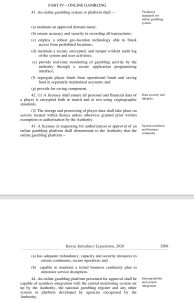
One of the most notable changes is the requirement for real-time regulatory monitoring. Operators must now integrate their platforms with the GRA’s Central Monitoring System through secure APIs, enabling the regulator to access live operational data. Additional requirements include geolocation controls, encrypted audit logs, and strict separation of player funds from operational accounts.
The licensing framework has also been expanded to cover a wider range of industry participants. In addition to casinos, bookmakers, and lotteries, software providers, equipment manufacturers, and testing service providers are now required to obtain licences. New licence categories have also been introduced for online bookmakers, online casinos, and online lottery operators.
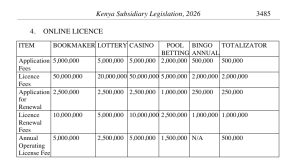
Under the revised fee structure, online bookmakers and casinos will each pay a licence fee of KES50m, while online lottery operators will pay KES20m, alongside other applicable fees.
Foreign-based operators face stricter entry conditions, including a minimum capital requirement of KES100m and a KES200m security bond. They must also comply with both Kenyan laws and regulations in their home jurisdictions, while implementing safeguards to restrict unauthorised access within Kenya.
The reforms place strong emphasis on responsible gambling and player protection. Operators are required to implement age verification systems, adopt responsible gambling policies, and participate in a national self-exclusion programme.
Technology and data governance standards have also been strengthened, with operators required to encrypt user data, maintain system resilience, and, in most cases, host gambling data within Kenya.
Although the new rules are now in effect, operators licensed under the previous system have been granted a 60-day transition period to comply and obtain licences under the updated framework.
Overall, the reforms mark a significant shift in Kenya’s approach to gambling regulation, aimed at improving oversight, enhancing consumer protection, and modernising the industry.