


How Mobile Money Is Powering Betting in Kenya: The Engine Behind Africa’s Biggest Betting Market

Kenya has become one of Africa’s most active betting markets, and the reason is not complicated: mobile money. With platforms like M-Pesa and Airtel Money reaching tens of millions of Kenyans who never had a bank account, mobile money betting in Kenya has removed nearly every barrier between a punter and a bet slip. You no longer need a bank card, a physical betting shop, or even a smartphone with data a basic feature phone and a PIN are enough.
This article breaks down exactly how mobile money is driving the growth of sports betting and online gambling in Kenya, what it means for deposits, withdrawals, and taxes, and where the industry is headed as new regulations and levies take shape in 2026.
Why Mobile Money and Betting in Kenya Are a Perfect Match
Kenya is often called the home of mobile money, and for good reason. M-Pesa now has 37.91 million monthly active users in Kenya, with customers moving KES 41.7 trillion through the platform across 46.4 billion transactions in the financial year ending March 2026 a 25% jump in volume from the previous year. That scale of adoption created the perfect infrastructure for online betting to flourish.
A few factors explain why mobile money betting apps in Kenya took off so quickly:
- Near-universal access. Millions of Kenyans who are “unbanked” in the traditional sense are fully “mobile-banked,” giving betting operators instant access to a massive customer base.
- Instant deposits and withdrawals. Funds move between a betting wallet and a mobile money wallet in seconds, not days.
- Low entry barrier. Punters can stake as little as KES 10–50, making betting accessible to almost any income level.
- Kenyans already trust mobile money for rent, salaries, and business payments, so extending that trust to betting platforms felt natural.
How M-Pesa Betting Deposits and Withdrawals Actually Work
For most Kenyan bettors, the entire wagering journey happens through a paybill number linked to their betting account.
Making a Deposit
The bettor opens the M-Pesa (or Airtel Money) menu and selects “Lipa na M-Pesa” or “Pay Bill.”
They enter the operator’s paybill number and their betting account number as the reference.
Funds are deducted from the mobile wallet and credited to the betting wallet almost instantly.
Withdrawing Winnings
Cashing out works the same way in reverse, the bettor requests a withdrawal on the betting platform, and the amount is pushed directly back to their M-Pesa or Airtel Money account, usually within minutes.
Tax Deductions on Every Transaction
What many bettors don’t realize is that tax is deducted automatically at both ends of this cycle. Under the Finance Act 2025, a 5% excise duty is charged on every deposit from mobile money into a betting wallet, and another 5% excise duty is charged on every withdrawal back to M-Pesa or a bank account regardless of whether the money withdrawn is profit or simply a returned stake. Licensed operators like Betika display this breakdown directly on the withdrawal or bet slip screen, showing exactly how much goes to the Kenya Revenue Authority (KRA) and how much lands in the user’s mobile wallet.
This real-time deduction model benefits both the taxman and the bettor: KRA collects revenue automatically, and punters avoid unpredictable year-end tax bills.
The Regulatory Backbone: GRA, KRA, and Licensed Operators
Kenya’s betting industry doesn’t run on mobile money alone it runs on tight regulatory oversight tied directly to those mobile transactions.
The Gambling Regulatory Authority (GRA) now requires full integration with KRA’s real-time tax remittance system as a condition of licensing, not a voluntary compliance measure, with operators required to compute and remit excise duty on every mobile money deposit by 7am daily via the KRA M-Pesa Pay Tax paybill. This tight coupling between mobile money rails and tax enforcement has transformed how effectively Kenya collects betting revenue.
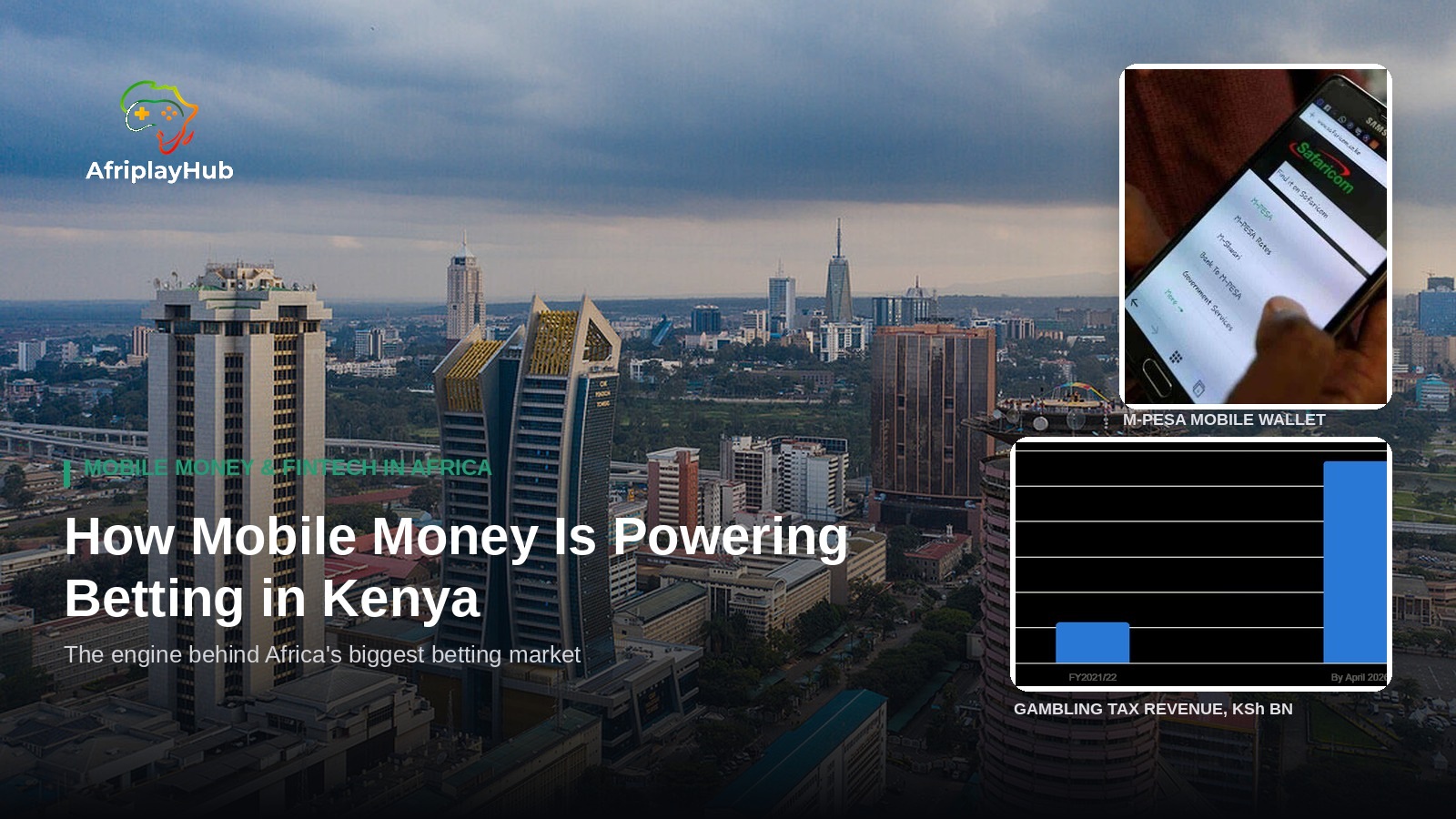
Gambling tax collections have grown from KSh 5.7 billion in the 2021/22 financial year to KSh 28.45 billion by April 2026, a jump driven largely by real-time monitoring systems now deployed across more than 100 licensed betting firms.
Why This Matters for Bettors
Only operators licensed by the GRA can legally connect to Kenya’s mobile money tax infrastructure.
Punters should always confirm an operator’s licence status on the official GRA portal before depositing.
Unlicensed or offshore betting sites that bypass local mobile money paybills operate outside this protective framework, leaving users with far less recourse if something goes wrong.
New Taxes and Rules Reshaping Mobile Money Betting in 2026
The relationship between mobile money and betting in Kenya is entering a new phase, with several proposals in the Finance Bill 2026 poised to change how much bettors actually take home.
A Proposed Return of the Winnings Tax
The Finance Bill 2026 proposes introducing a 20% tax on gambling winnings, layered on top of the existing 5% excise duties on betting deposits and withdrawals. The bill also expands the definition of taxable deposits into betting accounts, broadening the scope of what the government can tax. If passed, this would mark a return to a withholding-style tax structure similar to one Kenya used before the Finance Act 2025 simplified it.
VAT on Mobile Money Transaction Fees
Betting isn’t the only target. The same Finance Bill 2026 seeks to impose a 16% value-added tax on the transaction fees charged by mobile money providers like M-Pesa and Airtel Money. Because bettors move money in and out of their wallets constantly, any increase in M-Pesa transaction costs directly affects the overall cost of betting.
What This Means in Practice
For a bettor placing a KES 100 deposit today, KES 5 is taken as deposit excise duty, leaving KES 95 to land in the betting wallet, on top of the separate M-Pesa transaction fee charged for the paybill payment itself. If the proposed winnings tax and VAT changes pass, punters could see a noticeably smaller net payout on both deposits and winnings compared to previous years.
Popular Mobile Money Betting Platforms in Kenya
Several GRA-licensed operators have built their entire deposit and withdrawal systems around mobile money, including:
- Betika
- SportPesa
- Odibets
- Betpawa
- Mozzartbet
- Helabet
- 22Bet
All of these operators route deposits and withdrawals through M-Pesa, with the same 5% deposit and withdrawal excise duties applying regardless of which platform a bettor chooses. The competitive advantage between operators now mostly comes down to odds, promotions, and app experience not payment convenience, since mobile money has effectively standardized the deposit-and-withdraw process across the entire industry.
Responsible Betting Reminder
Betting should always be treated as entertainment, not an income strategy. Kenyan regulators require operators to display responsible gambling messaging, and support is available through the GRA helpline for anyone who feels their betting activity is becoming a problem. Only wager money you can afford to lose, and always confirm an operator’s licence before depositing.
Conclusion
Mobile money has done more than simplify betting in Kenya it has built the entire foundation the industry now stands on. From instant M-Pesa deposits to automated tax remittance and real-time regulatory oversight, mobile money betting in Kenya has created a fast, transparent, and heavily monitored ecosystem that few other African markets can match. As the Finance Bill 2026 introduces new taxes on both mobile money transactions and betting winnings, that relationship is about to be tested again but given how deeply mobile money is embedded in the everyday financial lives of Kenyans, it’s unlikely to slow the sector down for long.
This article is for informational purposes only and does not constitute financial or legal advice. Betting regulations and tax rates are subject to change; always verify current rules with the Kenya Revenue Authority (KRA) and the Gambling Regulatory Authority (GRA) before depositing or withdrawing funds.
https://www.igamingnews.biz/africa-online-betting-mobile-money/