



THE STORY
Zuri was good at her job.
As a compliance officer at a mid-sized Lagos betting company, she had spent three years building a reputation for thoroughness, the kind of person who read the fine print, flagged the inconsistencies, and asked the questions that nobody else wanted to ask. So when a new corporate client began placing unusually large, unusually frequent deposits across multiple accounts in a single week, Zuri noticed. The pattern was too clean. The amounts were just below the reporting threshold. Not once, not twice, but eleven times in four days.
She flagged it.
Her report went upstairs on a Tuesday. By Thursday, she was told the client was “strategically important” and that her concerns had been “noted and reviewed.” The following Monday, the deposits continued. Three months later, during a routine audit, investigators from Nigeria’s Economic and Financial Crimes Commission arrived at the company’s offices with a warrant. The client, it turned out, had been using the betting platform to launder the proceeds of a large-scale procurement fraud, cycling dirty money through legitimate-looking wagers and withdrawing it as clean winnings.
Zuri had been right all along. But by the time anyone listened, the damage was done.
Her story is fictional. The problem it describes is very real and it is one of the most consequential challenges facing African gaming today.
THE INTERSECTION OF MONEY AND GAMES
According to the Africa Gaming Market Report, industry growth, size and forecast analysis, Africa’s gaming industry is experiencing remarkable growth, driven by rapid digital adoption, a youthful population, and increasing internet connectivity. The report estimates that the continent is home to approximately 349 million active gamers, with the market valued at US$2.29 billion in 2026 and projected to reach US$4.10 billion by 2031. This impressive trajectory positions Africa’s gaming sector as one of the most attractive investment opportunities in the global digital entertainment economy.
Daily sports betting wagers in Nigeria alone exceed ten billion naira. Mobile money has made micro-transactions seamless for millions of players across the continent. The infrastructure of African gaming platforms, payments, audiences has never been more sophisticated or more accessible.
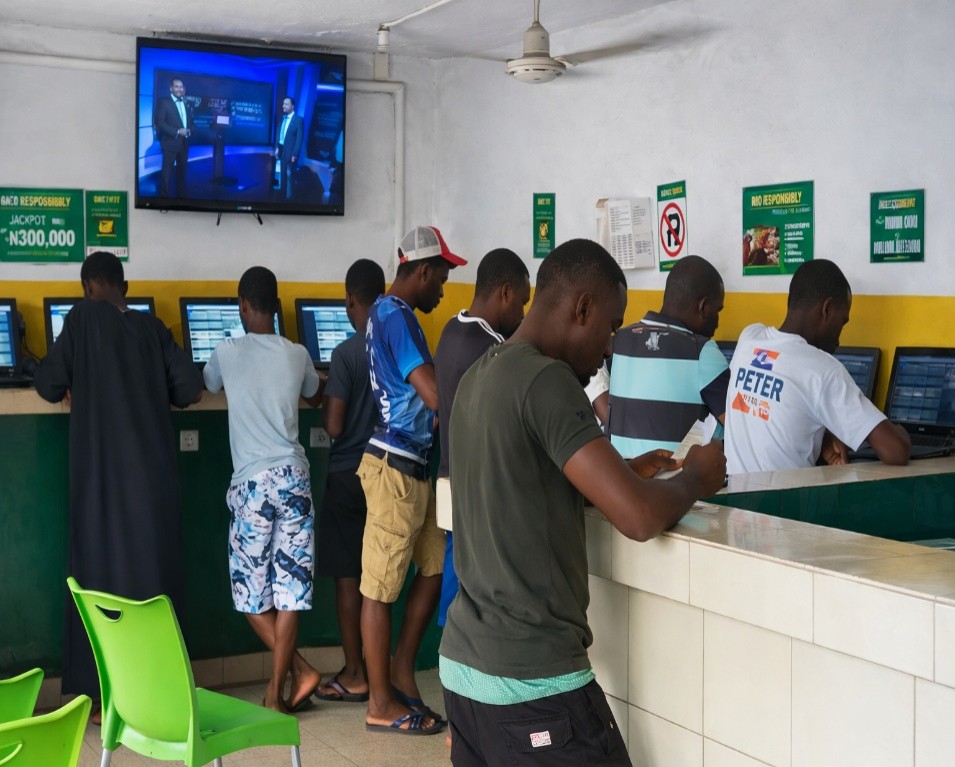
But that same sophistication, that same accessibility, and that same daily movement of billions of naira, shillings, and cedis creates conditions that financial criminals find deeply attractive. Gambling has always sat at an uncomfortable intersection between legitimate entertainment and financial risk and in a region where regulatory frameworks are still maturing, where cross-border digital transactions are difficult to monitor, and where the gap between licensed and unlicensed operators remains wide, the potential for financial crime is both real and growing.
Understanding that potential where it lives, how it operates, and what is being done to address it is not just a matter of regulatory compliance. It is a matter of the industry’s long-term survival and credibility.
HOW FINANCIAL CRIME ENTERS THE GAMING ECOSYSTEM
Financial crime in gaming does not arrive with a villain’s announcement. It arrives quietly, wearing the clothes of ordinary transactions, hidden inside the everyday noise of a busy platform. Understanding its entry points is the first step toward building the defences that keep it out.
The most common form is money laundering and gambling. It has long been recognised globally as one of the most effective vehicles for it. The mechanics are straightforward and therefore difficult to detect. A criminal deposits illicit funds into a gambling account, places bets of varying sizes across different markets and outcomes, and then withdraws the residual balance as what appears to be legitimate gambling winnings. The funds have moved through a licensed, regulated platform and emerged on the other side looking entirely clean. In markets with weak Know Your Customer protocols, limited transaction monitoring, and fragmented reporting systems, this process can be repeated at scale with relatively low risk of detection.
Match-fixing and result manipulation represent a second and equally serious dimension of financial crime in gaming. Across Africa’s sports betting markets, where passion for football runs deep and betting volumes on European and continental competitions are enormous, the financial incentive to manipulate outcomes is significant. A syndicate willing to bribe a referee, a goalkeeper, or a club official can place precisely targeted bets on specific match events and generate returns that dwarf the cost of the fix itself. The victim in this scenario is not only the integrity of the sport. It is every honest bettor who placed a fair wager on a game that was never going to be fair.
A third entry point is fraud, both against operators and against players. Account takeovers, bonus abuse at industrial scale, identity theft used to open multiple accounts, and the exploitation of platform vulnerabilities to manipulate odds or game outcomes are all forms of financial crime that impose direct costs on legitimate businesses and undermine player trust. For operators competing in already thin-margin markets, fraud is not merely an inconvenience. It is an existential pressure.
Finally, and perhaps most pervasively, there is the unlicensed operator. The platform that operates entirely outside any regulatory framework, takes deposits from African players, and offers no guarantees of fairness, security, or payout. These operators do not merely expose players to financial loss. They actively undermine the tax base that funds regulatory enforcement, distort competition for legitimate operators, and provide fertile ground for all of the financial crimes described above, because they operate in the dark by design.
AFRICA’S REGULATORY RESPONSE — WHAT IS BEING BUILT
The good news is that Africa’s regulatory community is no longer passive in the face of these threats. The governance revolution sweeping the continent’s gaming sector is being driven, in significant part, by a recognition that financial integrity and regulatory credibility are inseparable and that neither can be achieved without the other.
At the Africa Gaming Expo 2026 in Lagos, the continent’s most consequential annual gathering of gaming regulators and operators, financial crime was not a fringe topic discussed in side sessions. It was a central theme of the main stage. The CEO of the Lagos State Lotteries and Gaming Authority, Bashir Are, announced the implementation of an African-wide blacklist of non-compliant operators. A coordinated enforcement mechanism that treats harm to one jurisdiction as harm to all. Uganda’s regulator called explicitly for stronger cross-border cooperation on anti-money laundering and counter-terrorism financing frameworks. Francophone African regulators from Guinea, Benin, Burundi, and the DRC gathered to examine how their evolving policy frameworks could better address the financial integrity challenges specific to their markets.
WHAT INTEGRITY ACTUALLY REQUIRES
For operators navigating this landscape, financial integrity is not a philosophy. It is a set of concrete, operational commitments that must be embedded across every layer of the business from the technology stack to the human resources function to the board’s risk governance framework.
It begins with knowing who your customers are. Robust Know Your Customer processes, identity verification, source of funds checks for high-value accounts, enhanced due diligence for politically exposed persons are the first line of defence against money laundering. Without them, a platform cannot distinguish between a legitimate recreational bettor and someone using the account to cycle criminal proceeds. In markets where document verification has historically been difficult, biometric identity solutions and mobile identity APIs linked to national databases are making KYC both more reliable and more accessible than ever before.

It continues with watching what your customers do. Transaction monitoring the systematic, technology-enabled review of betting and payment patterns for anomalies is the operational tool that turns KYC data into real-time intelligence. It is the system that Zuri was relying on when she flagged the unusual deposit pattern at the start of this story. When it works, it works. When it is overridden by commercial considerations, the consequences follow as surely as the EFCC warrant arrived at the Lagos betting company’s door.
It demands a culture of accountability. Compliance is only as effective as the organisational culture that supports it. In companies where compliance officers are treated as obstacles to revenue rather than guardians of reputation, where suspicious activity reports go upstairs and come back down marked “noted,” where the pressure to onboard strategically important clients overrides the discipline to screen them. In those companies, financial crime will find a home. Building a culture of genuine accountability means investing in training, protecting whistleblowers, empowering compliance functions with real authority, and ensuring that the leadership team understands that the reputational and legal cost of a single money laundering scandal will dwarf any short-term revenue benefit.
And it requires collaboration. No single operator, regulator, or government agency can address financial crime in African gaming in isolation. The threat is cross-border, technically sophisticated, and constantly evolving. Addressing it demands the kind of sustained information sharing, joint enforcement, and coordinated policymaking that is only possible through genuine collaboration between regulators, operators, financial intelligence units, law enforcement agencies, and international bodies like the FATF and Interpol.
THE STAKES
Zuri left her job six months after the EFCC investigation concluded. She was not implicated in any wrongdoing. The investigators confirmed she had done everything right. But she left anyway, because she understood something that the company’s leadership had not. Financial integrity is not merely a compliance function. It is the foundation on which an entire industry’s credibility rests.
Africa’s gaming industry stands at a remarkable inflection point. The market is large, growing, youthful, and full of genuine opportunity for operators who build their businesses honestly and regulators who govern with both rigour and intelligence. But the same growth that makes the industry exciting also makes it a target for money launderers seeking new vehicles, for match-fixers seeking new markets, for fraudsters seeking new victims, and for unscrupulous operators seeking jurisdictions where the rules are still soft enough to exploit.
The future of African gaming belongs to the players, regulators, and operators who understand that integrity is not the enemy of growth. It is its precondition. Every licensed platform that turns away a suspicious deposit, every regulator who builds a monitoring system that actually works, every compliance officer who files a report that is actually read and acted upon: they are all, in their own way, keeping the game clean.
And a clean game, in the end, is the only game worth playing.
Editor’s Note: This article draws on industry insights and internationally recognized guidance from the Financial Action Task Force (FATF), United Nations Office on Drugs and Crime (UNODC), International Association of Gaming Regulators (IAGR), World Lottery Association (WLA), ISO 27001 information security standards, and regulatory developments across Africa.
At AfriplayHub, we believe the future of African gaming will not be measured solely by revenue or market size. It will be measured by the confidence that players, regulators, investors, and communities place in the industry’s integrity. Because in gaming, the biggest win is not the jackpot, it’s trust.
Follow us on all social media platforms: @AfriplayHub | www.afriplayhub.com
#FinancialCrime #GamingIntegrity #AfricanGaming #AML #AfriplayHub #GamingRegulation #MoneyLaundering #SportsBetting #Compliance